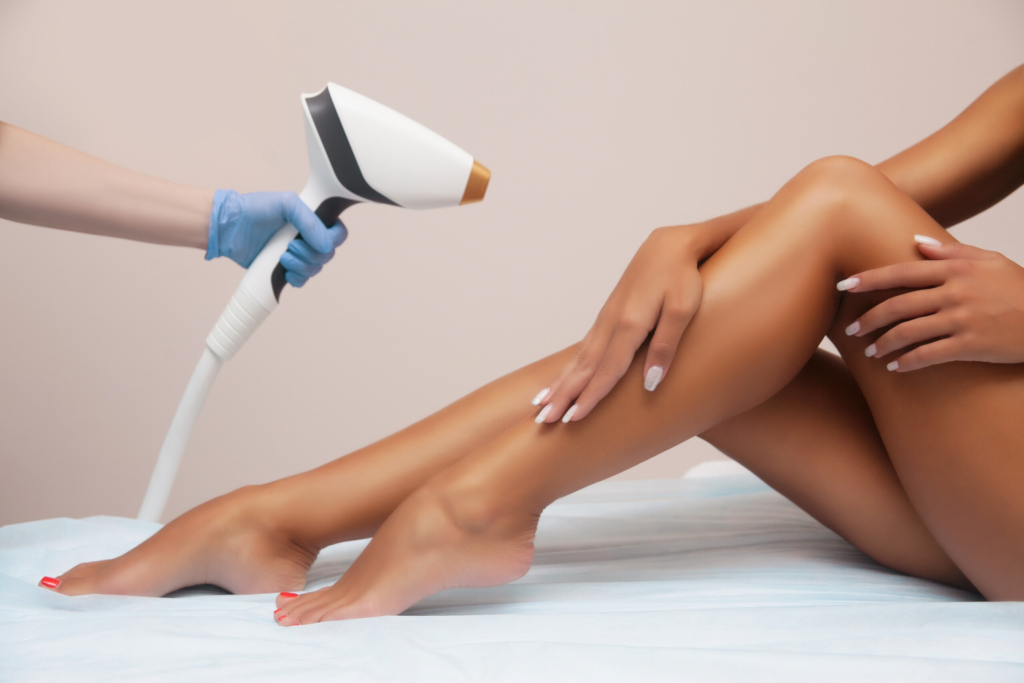
Even though one of the beauty trends of recent years was letting underarm hair grow out, most women—and by now many men too—feel noticeably more comfortable hair-free. Smooth skin stands not only for a well-groomed appearance and self-confidence, but also for style, hygiene, and self-care rituals.
As lovely as the idea of forever-smooth legs sounds in theory, hair removal by laser can, in practice—like all treatments in the medical and aesthetic field—come with normal side effects and reactions. If you decide to go for permanent hair removal, you should definitely familiarize yourself with the risks of laser hair removal before treatment.
In this blog post, we’ve therefore compiled everything worth knowing about the risks of laser hair removal for you in a nutshell. Let’s get started!
First things first: how laser hair removal works
With permanent laser hair removal, unwanted hair is reliably removed via needle and laser epilation by trained specialists.
Our laser hair removal at Sanft & Schön, for example, is based on a patented system that works with a 3-wave diode laser. This bundles light so that it can penetrate your skin in a targeted way—destroying the hair root in the process. More precisely, the laser light penetrates the superficial layers of your skin, where the melanin in your hair absorbs the energy. This converts the light energy into heat, damaging the surrounding cell structures responsible for your hair regrowing. The result is permanently hair-free skin.
That’s the theory. However, before we start with permanent hair removal, a detailed consultation takes place first. We need to get to know your skin and your hair in order to rule out possible risks of laser hair removal treatment. That’s because permanent laser hair removal isn’t suitable for every skin type. Of course, you can already determine your skin type yourself to see whether your skin is suitable for laser hair removal.

Permanent laser hair removal: not every skin type is suitable
The bad news first: laser epilation isn’t suitable for every skin type and hair color. Standard laser devices, like those found in most beauty studios, really only work well on dark or dark blonde hair on light skin without laser hair removal risks.
Hair removal by laser becomes a particular challenge for very light skin, blonde, and reddish hair. White and platinum-blonde hair contains too little melanin to absorb the laser radiation and transfer it to the follicle. In such cases, burns can occur. To rule this out, you should definitely go for a test laser session if in doubt.
However, it can also be problematic for people with very dark skin: in this case, a laser treatment can often be performed only rarely, if at all. That’s because laser treatment on darker skin requires special devices that use particularly low energy doses, as otherwise pigment disorders can occur.
If pigment disorders actually occur during your treatment, you should consult with the team and, in the worst case, discontinue the laser hair removal. Although the light or overly dark spots usually even out to match the surrounding skin tone again over time, it’s still a risk that, understandably, not every customer wants to take.

Laser hair removal risks: skin redness, blistering, and scarring
Do you have light skin and dark hair? Great—that means you belong to the group of people who, statistically, tolerate laser treatment best. Unfortunately, though, even with melanin-rich hair you’re not completely immune to laser hair removal risks and unpleasant after-effects of the treatment. The typical accompanying effects of a laser treatment—such as pain, redness, blisters, edema, crusting, bleeding, temporary hypo- and hyperpigmentation, and unwanted hair loss—can also occur for you.
But don’t worry: these inconveniences are usually temporary and heal without scarring. It’s different if the laser in the studio was set too strong—in the worst case, this can result in irreversible scarring. More severe side effects also include higher-degree burns with scarring, wound-healing disorders with infectious consequences, dyspigmentation (disruption of the skin’s pigment levels), as well as bacterial, viral, and fungal infections. The latter, for example, are caused by various types of fungi.
Lasering with moles
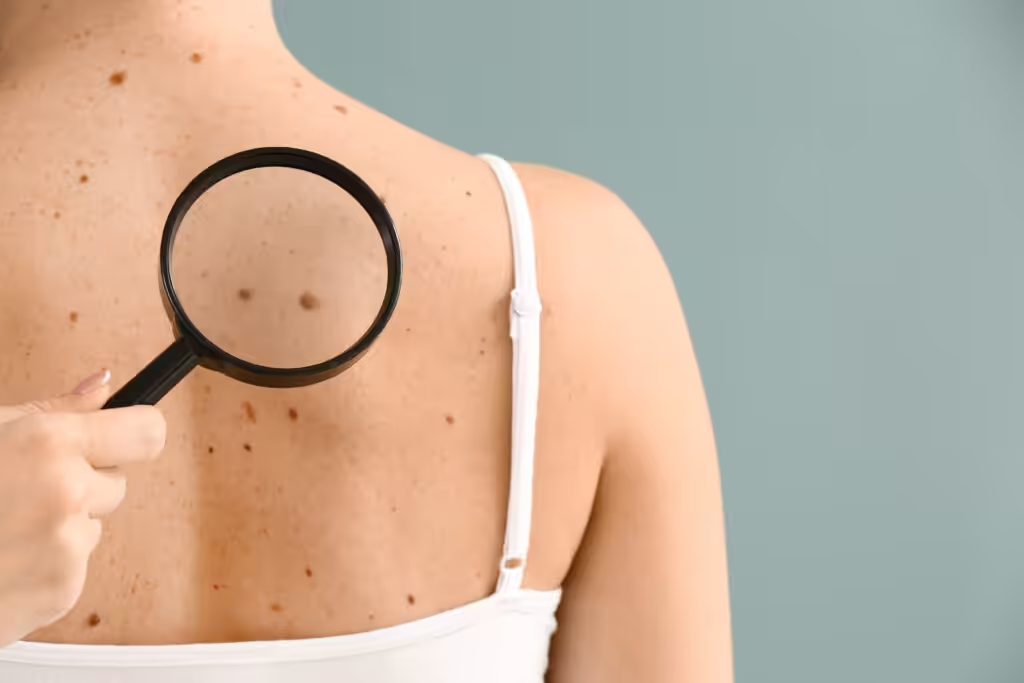
Moles are also among the risks of laser hair removal. Moles generally contain a lot of melanin—so, just like the hair root, which should be the actual target of the treatment, they absorb the bundled light from the laser. Since this can lead to severe burns, laser hair removal is not possible on heavily pigmented areas of skin such as moles.
If you have moles, you should therefore definitely not subject that particular area of skin to permanent hair removal. Our trained staff are of course aware of this and make sure that your moles are carefully covered and excluded during treatment as a matter of principle.
Source: Pixel-Shot/shutterstock
Laser treatment: when does the risk outweigh the benefit?
In some cases, it’s wise to not even consider permanent hair removal—for example, laser treatment is not recommended if you suffer from severe circulatory disorders or venous diseases. Regular use of cortisone or anabolic steroids is also considered a contraindication. Likewise, if you’re currently pregnant or rely on a pacemaker, you should refrain from laser treatment as a precaution—especially when doing it yourself at home.
Laser hair removal risks: home lasers
Home lasers are now offered at many discount retailers and advertised as an affordable alternative for home use. Medical recommendations show just how high the risks of these devices are: according to the medical journal, their use is strongly discouraged.
Patients without medical training should under no circumstances attempt this themselves, as treatment by laypeople particularly often leads to complications on the skin and eyes. So: hands off, and go see an expert instead. In professional studios, you can be sure that your laser hair removal will be carried out correctly and in line with your skin and hair type.
Conclusion: laser hair removal risks
Ever since lasers became established in the medical, cosmetic, and aesthetic field, many treatments with excellent results have already been carried out. Permanent hair removal, by the way, has long since stopped being just for women. Our male clients should feel addressed too: laser hair removal for men offers numerous advantages.
But as with all therapies, laser treatment also comes with a range of risks and accompanying effects, which can—in rare cases—extend to more serious side effects. Fortunately, these usually disappear on their own or can already be avoided before the procedure through a professional consultation. So be sure to talk to your beautician before getting laser treatment.
In summary, irritation that occurs directly from the removal process in the first few hours after treatment usually subsides very quickly in most cases. Even hyperpigmentation—meaning darkening or lightening of the treated skin compared to the surrounding skin areas—usually fades quickly and, at the latest, within a few months.
Depending on the area of the body, the pain of laser treatment can be reduced thanks to optimized treatment methods and state-of-the-art technology, so you don’t need to be afraid of it. To protect your eyes from the laser light, you’ll also be given special protective goggles that you must wear during the procedure.
In any case: home lasers are many times more dangerous than any professionally performed treatment at a beauty studio.
At Sanft & Schön, we’re happy to inform you in a personal consultation about possible, unwanted effects of laser hair removal Berlin Mitte. Do you already have questions about permanent hair removal beforehand? We’re happy to help you by phone or message.