
When products talk about ‘skin types’, manufacturers basically mean the appearance and texture of your skin. Caring for it properly is very important for your body, because: with a total surface area of two square meters the skin is your largest organ and takes on numerous vital tasks. It’s not only an energy store, but also a shield against external influences, and through millions of receptors it helps you perceive different stimuli such as temperature and touch. Our skin is therefore a vital organ that you should definitely get to know and take good care of.
What skin type am I: What does your skin type depend on?
Your skin type basically depends on your skin’s sebum production. It’s not only the activity of sebum production that matters, but also the composition of the sebum itself. In addition, your skin’s moisture production is also assessed, as well as how well your skin is able to retain it.
Your skin type is partly genetically determined, but certain properties of your skin are also influenced by external factors and your lifestyle. Regular alcohol consumption draws water out of your skin cells, which means your skin regenerates less well – and ages faster. But your diet and your hormone balance also have an influence on your skin’s condition. You may still remember your puberty, when you were particularly prone to blemishes thanks to hyperactive sebaceous glands.
The good news is: you’re not completely at the mercy of your genetics, and in keeping with the motto “Beautiful skin from within” you can contribute a lot to a more beautiful complexion yourself with the right skincare – including for men – and a healthy lifestyle, even if you’re struggling with skin-type-specific problems.
Why is it important to know which skin type you have?
A very good question. Because determining your skin type isn’t just about choosing the right skincare products. If your skin regularly itches, dries out, and gets oily, these symptoms can get in the way of your skin’s daily work as a super-organ. So knowing your skin type isn’t just about aesthetics, but also about health.
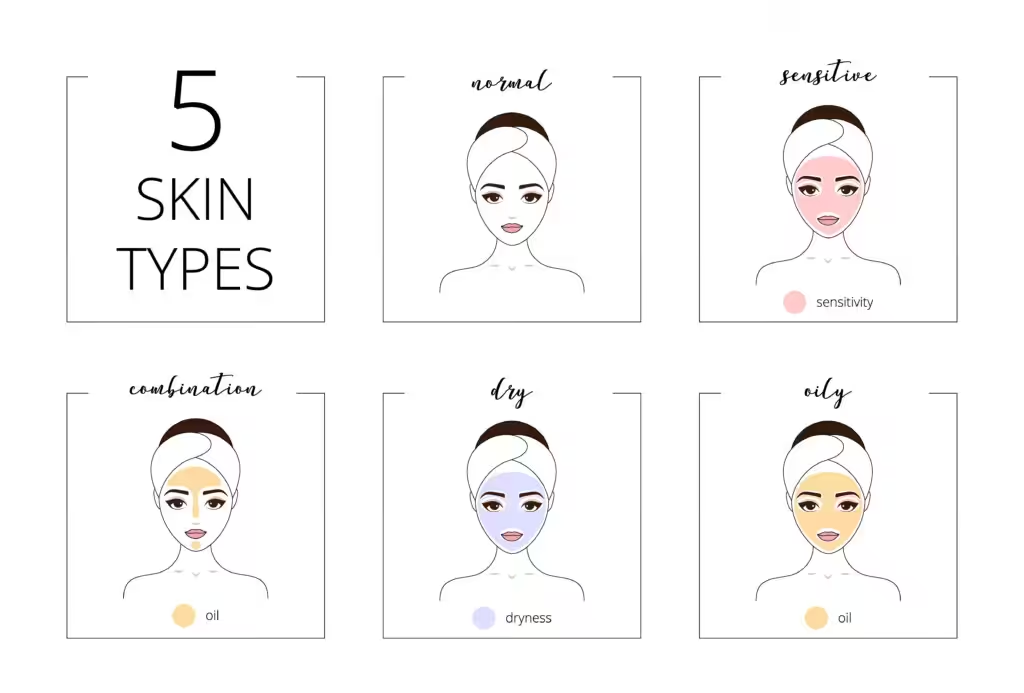
So that in the future you not only know the beauty trends 2022, but also your skin type, we’re now presenting the characteristics of the different skin types – normal skin, dry skin, sensitive skin, oily skin, and combination skin.
Why is it important to know which skin type you have?
A very good question. Because determining your skin type isn’t just about choosing the right skincare products. If your skin regularly itches, dries out, and gets oily, these symptoms can get in the way of your skin’s daily work as a super-organ. So knowing your skin type isn’t just about aesthetics, but also about health.
So that in the future you not only know the beauty trends 2022, but also your skin type, we’re now presenting the characteristics of the different skin types – normal skin, dry skin, sensitive skin, oily skin, and combination skin.
Determine your skin type: #1 Normal skin
You don’t really have any problems with your skin and skincare is an uncomplicated topic for you? Then you might be one of the lucky people with normal skin.
How to recognize normal skin:
Your skin shows medium to fine pores, and tends toward neither strong shine nor dry or rough patches. Skin oil (sebum) and skin moisture are mostly in balance.
What experts say about normal skin:
Congratulations! You belong to the people who have uncomplicated, radiant skin. Normal skin is so unproblematic because its acid mantle is stable and can therefore fend off external influences well. But: for it to stay that way, even normal skin needs the right care.
Determine your skin type: Our care tips for normal skin:
- With normal skin you’re off the hook – and you have a free choice when picking your favorite skincare products. You tolerate most ingredients and never have to deal with allergic reactions.
- Mild cleansing products and lukewarm water are basically all your skin needs to be freed of sebum and make-up. After cleansing, it’s best to apply a moisturizer of your choice – et voilà. Ready for bed!
- Remember: after showering, your skin needs enough moisture to maintain its protective layer.
Determine your skin type: #2 Sensitive skin
Your skin reacts negatively to new skincare products and you struggle with redness? Then your skin might be very sensitive.
How to recognize sensitive skin:
Your skin is thin, light, and often slightly dry, and your top layer of skin also appears flaky and turns red quickly. Redness, itching, or an unpleasant tight feeling also show up on your skin as soon as you use a new skincare product. All three symptoms are a clear sign that you have sensitive skin. A common reason for irritation of this kind is a damaged skin protective barrier.
What experts say about sensitive skin:
If your skin gets irritated by certain skincare products, this is often caused by an allergy to the ingredients leading to eczema or other skin changes such as seborrheic dermatitis or rosacea. It’s best to consult your dermatologist to find out what’s triggering the allergic reaction.
Determine your skin type: Our care tips for sensitive skin:
- Make sure your skincare products are dermatologically tested and of natural origin.
- Mild ingredients such as aloe vera or panthenol help preserve your skin’s natural protective function.
- Less is more: sensitive skin benefits from creams that are soothing and calming. They should be free of additives and reduced to as few ingredients as possible.
- One of our anti-aging tips: generally avoid products with fragrances and alcohol to keep your skin barrier as resistant to disruption as possible.
Determine your skin type: #3 Dry skin
You suffer from a tight feeling on your skin not just in winter, and creams get absorbed by your skin immediately? Then you probably belong to the dry skin type.
How to recognize dry skin:
Your skin is fine-pored, rough, cracked, and brittle. It feels tight, flakes, itches, and in some places reddened patches are already showing. The sebaceous glands that are supposed to keep your skin elastic, supple, and slightly moist produce too little fat – which disrupts the regulation of your skin’s moisture and causes fine dehydration lines to form.
What experts say about dry skin:
Not only age, hereditary predisposition, malnutrition, alcohol and tobacco use, or environmental factors such as dry heating air can be the cause of your dry skin – but also various conditions such as atopic dermatitis or psoriasis. Medications, too, can repeatedly cause side effects such as dry skin.
Determine your skin type: Our care tips for dry skin:
- Use a care product that provides your skin with sustained, sufficient moisture – products with hyaluronic acid, shea butter, marigold, peanut, almond, olive, or argan oil are ideal for you.
- When cleansing your skin, be sure not to use water that’s too hot, so you don’t damage your skin further and dry it out.
- Be sure to drink three liters of water daily – and avoid alcohol and nicotine, which additionally harm your skin.
- Alcohol-free, re-fattening products help protect your skin from drying out. A rich skincare routine is especially important for dry skin in winter.
- Would you like to hydrate your dry skin and minimize large pores? A good decision, because with the Aquafacial Berlin Mitte your skin is cleansed, massaged, and supplied with essential acids and vitamins using our HYDROcareH2O device, to achieve a lastingly radiant complexion.
Determine your skin type: #4 Oily skin
You think your skin is rather oily? Then the following characteristics are probably familiar to you.
How to recognize oily skin:
Your skin has large pores, shines, and is visually noticeable due to an oil film, which is caused by excessive sebum production. The thickness and density of your skin are generally very good, it’s robust and resistant – and therefore tends to develop wrinkles or lose firmness only very late.
What experts say about oily skin:
Compared to normal or dry skin, this skin type involves an overproduction of sebum as well as a keratinization disorder of the sebaceous glands. Because the sebum can no longer drain properly this way, blackheads form. At the same time, the mixture of dead skin cells and sebum is the ideal breeding ground for bacteria. This can lead to inflammatory reactions in your skin, resulting in redness and pimples.
Determine your skin type: Our care tips for oily skin:
- Facial cleansing is essential for you: wash your face morning and evening with a mild facial cleanser and then dry it with a fresh towel. Since towels encourage bacterial growth, you should change your towel every two to three days.
- Exfoliants and face masks are recommended for you twice a week to deep-clean your pores and free them of dead skin flakes.
- Special cosmetics for oily skin help improve your skin’s protective coating. Since your skin’s pH value is around 5.5, your skincare products should have this value too.
- When choosing your skincare products, you can use various tinctures, creams, and gels for day and night, as long as you make sure the products contain no fat.
- For radiantly fresh, even skin without acne pimples and painful inflammation, we recommend our Sanft & Schön acne treatment Berlin. Thanks to a professional deep cleanse, our beauticians help you achieve an even complexion with a lasting effect.
Skin type 5: Combination skin
Your skin feels tight in some places, yet you fight an oily shine every day? Then you probably belong to the combination skin category.
How to recognize combination skin:
You don’t identify with any of the skin types presented so far – because although your cheeks feel relatively dry, your nose, forehead, and chin are oily. This exact combination of dry and oily is known in technical terms as combination skin and is related to excess sebum production in the T-zone.
What experts say about combination skin:
Doctors distinguish between two types of combination skin: combination skin oleosa and combination skin sicca. If your skin belongs to combination skin oleosa, your T-zone has noticeably large pores and is visually characterized by an oily shine due to high sebum production. Your cheeks, neck, and décolleté, on the other hand, tend to show fine pores and a strong lack of moisture – and therefore tend toward premature loss of elasticity.
Combination skin sicca, on the other hand, is dry and rather fine-pored in the T-zone, but still tends toward high sebum production. Because of the rather fine pores, the sebum can’t ‘drain off’ and leads to inflammation, which results in blemished skin with pimples.
Our care tips for combination skin:
- Cleanse your face twice daily with a mild cleansing foam and warm water to remove dirt and excess fat and open the pores.
- For your T-zone you should always use a clarifying toner. This way you can prevent pimples and blemishes.
- Your make-up should be specifically matched to your combination skin. It’s best to use light, moisturizing foundations and powders for the T-zone.
- For a very quickly oily T-zone, so-called ‘oil-control’ sheets are useful for on the go, quickly absorbing excess fat when needed.
- To clean your facial skin even more thoroughly, we recommend using a mild facial scrub once a week to gently remove skin flakes.
Source: reddish/shutterstock
What skin type am I: Conclusion
No matter how bad your skin problem may seem at first glance: there are many ways to balance out the weak points of your dry, sensitive, or oily skin with the right care.
Although your skin type is partly genetically determined, it’s not carved in stone like your fingerprint and can change over the course of your life due to hormonal changes or a healthier lifestyle. Now that you know your skin type, you can adapt your daily skincare routine accordingly and get the best out of your skin.
Would you like to have your skin type determined directly with us in Berlin by the trained eye of our experts? Then send us a message.
We also offer hair removal methods, waxing and laser hair removal, as well as two further facial treatments: microneedling and microdermabrasion in Berlin Mitte.