Even though smile lines only make a face more likeable, we still want to preserve the youthful appearance of our skin for as long as possible. Two active ingredients are especially popular for this: retinol and hyaluronic acid. Both substances have a positive effect on your skin and make your complexion glow. But how exactly do hyaluronic acid and retinol work? How are these active ingredients applied? And can side effects occur? In this article, we reveal whether retinol or hyaluronic acid really help against wrinkles and what to consider when using them.
Retinol or hyaluronic acid: What distinguishes these active ingredients
Hyaluronic acid and retinol are two completely different substances and therefore have different effects on your skin.
Retinol: The anti-ageing all-rounder
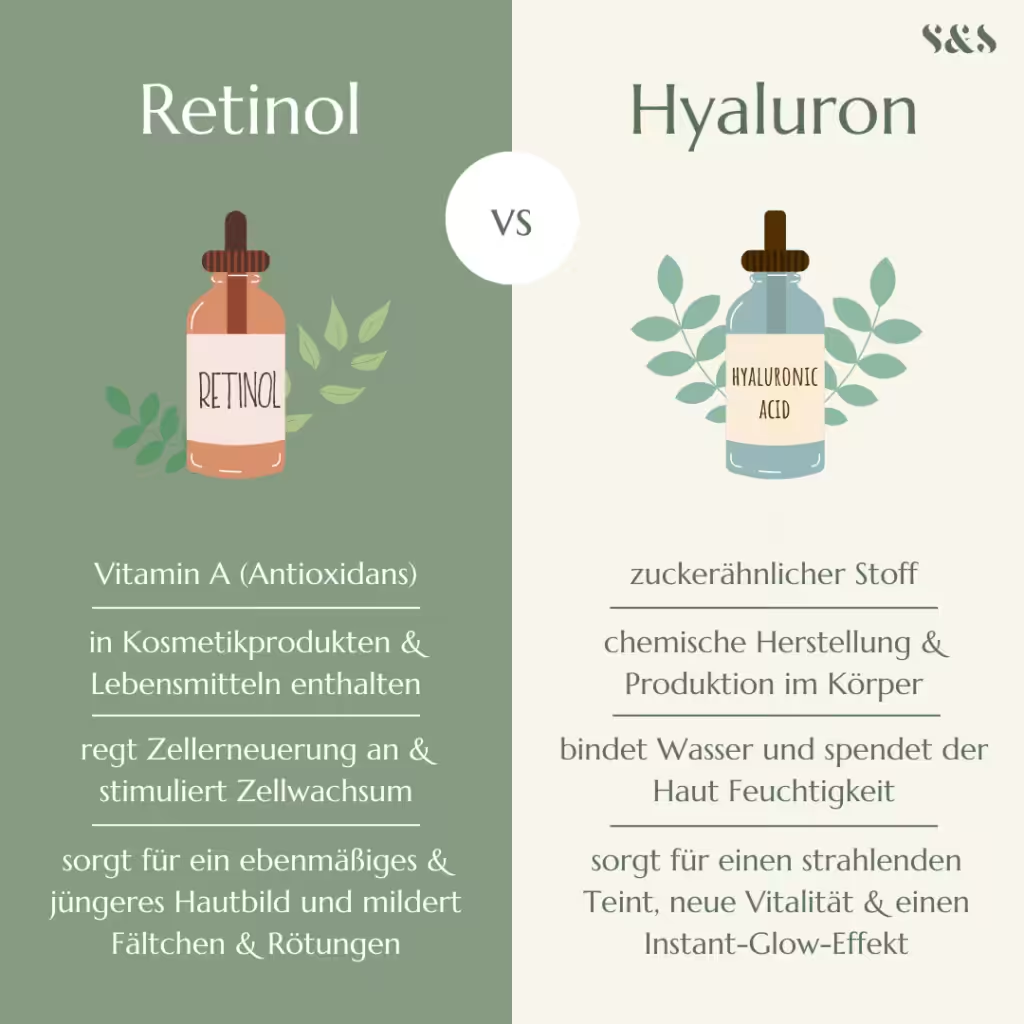
Retinol, also known as vitamin A, is a fat-soluble essential vitamin that plays an important role in building skin structure. When retinol or one of its milder precursors is applied to the skin, it is converted there into active retinoic acid. As an antioxidant, retinol acts as a radical scavenger for the body, protecting against impaired cell function and premature skin ageing. The active ingredient should therefore not only be applied in cosmetic products, but also consumed naturally in foods such as butter, fish, dairy products or egg yolks. No matter how good your cosmetic products are, your diet has a major influence on beautiful skin from within.
Because skin loses elasticity with age, retinol—with its rejuvenating and smoothing effect—is considered a real beauty wonder weapon: it stimulates cell renewal on the one hand and cell growth on the other. It also accelerates the skin’s own collagen production, automatically making skin look plumper and reducing fine lines. Thanks to its cell-regenerating effect, retinol also creates an even, uniform complexion because it can reduce pigmentation disorders, discolouration and acne scars. An acne treatment Berlin can also help here.
Hyaluronic acid: The moisture booster
Hyaluronic acid is a sugar-like substance (a “polysaccharide”) that can not only be produced chemically but is also made by the human body. The body’s own hyaluronic acid is, among other things, an essential component of connective tissue and supports physical movement in synovial fluid. The cosmetics industry, however, uses a completely different property: hyaluronic acid binds water. One gram of the substance can bind up to six litres of water and thus store a great deal of moisture in the body—and the skin.
Due to this binding property, hyaluronic acid is a popular ingredient in serums and creams—and delivers convincing results: it makes skin look fresher immediately after application and plumps it up from within, so it appears firmer straight away. This makes skin look smoother. The water molecules attracted by hyaluronic acid also increase the skin’s moisture and elasticity and reduce dehydration lines.
Intensive hydration makes the complexion glow, provides new vitality and creates an instant glow effect. Depending on the molecular structure used in serums, creams or masks, hyaluronic acid can be more or less effective. In direct comparison, low-molecular-weight hyaluronic acid is significantly more effective, powerful and long-lasting than high-molecular-weight hyaluronic acid.
Especially practical: Hyaluronic acid is also suitable for sensitive skin because it is a particularly mild active ingredient.
Image: Antoni Shkraba/pexels
Applying retinol or hyaluronic acid: How to achieve the best results
For the anti-ageing product you choose to develop its effect optimally, make sure to use it correctly and according to your skin’s needs.
Retinol: Regular use for visible results
It is best to apply a retinol serum in the evening after cleansing your face. Your serum’s effectiveness depends on its concentration: the further the active ingredient is from active retinoic acid in the conversion chain, the less effect you will see on your skin. We therefore recommend using retinol or retinal(dehyde). Start your new skincare routine with a low concentration, such as 0.1 percent retinol. Use it only twice a week until your skin gets used to it. You can then increase the active-ingredient concentration to 0.3 percent retinol or 0.05 percent retinal and use your serum daily.
Sanft & Schön tip: Store your retinol serum in the fridge! Thanks to the stable temperature, the active ingredients retain their effect for longer.
Although retinol is an absolute wonder weapon in anti-ageing care, it requires some patience before you can see results. Building new, additional collagen fibres takes not only weeks but sometimes months and requires regular, long-term use of the cosmetic product. Studies have shown, however, that “regular” does not necessarily have to mean daily: use the serum one to three times a week and you will achieve effective results. You can see the first visible results on the surface after around a month. Retinol is therefore ideal as a long-term active ingredient for caring for mature skin after 40.
Important: Retinol stimulates cell renewal, which greatly lowers your skin’s own protection against UV radiation. Therefore use a cream with SPF 30 or more every day to protect your fresh skin cells.
Mild but effective: Hyaluronic acid
Apply a hyaluronic acid serum directly after cleansing to still slightly damp skin, pat it in gently and seal it into the skin with a moisturiser. You can safely use hyaluronic acid daily at concentrations of up to two percent. This allows the active ingredients to develop optimally on your skin, and you can notice initial differences after around one week.
For a special glow effect, use hyaluronic acid twice a day: in the morning, the serum soothes your skin; in the evening, it protects against moisture loss and supports skin regeneration. A regular Aquafacial Berlin Mitte ideally complements your hyaluronic-acid skincare routine—it supplies your skin with an extra portion of moisture.
Retinol or hyaluronic acid? Layering as the ideal solution for all skin needs
Why choose one active ingredient when you can have both? You do not need to decide for retinol or against hyaluronic acid; effective layering lets you combine the benefits of both substances.
So-called “layering” describes the consecutive application of different skincare active ingredients and follows strict rules, because not all active ingredients can be combined without problems. With hyaluronic acid and retinol, however, you need not fear side effects from an incorrect combination. An exception is high-dose prescription retinoids.
Layering not only combines the benefits of the two substances but can also balance side effects. For example, hyaluronic acid prevents dry, itchy skin that can result from using retinol.
For correct layering, use the sandwich technique: apply hyaluronic acid morning and evening after cleansing to still slightly damp skin and pat the serum in gently. Once the serum has absorbed, retinol can be worked in. Finally, apply a moisturiser that seals the active ingredients into the skin. The combination of retinol and hyaluronic acid is ideal if you want to care for combination skin or suffer from dry, sensitive, dehydrated or blemished skin.
What side effects can occur with retinol or hyaluronic acid?
Active ingredients do not always have only positive effects on your skin; depending on your skin type, they can also cause side effects. This can happen directly on first application or after using a product for a longer period. The same applies to retinol and hyaluronic acid.
Retinol: Watch out for these side effects
Are you wondering whether retinol or hyaluronic acid is the right active ingredient for your skincare routine? Depending on how sensitive your skin is, only one of the two may be right for you. Since retinol has a particularly intense effect on skin, its use can lead to redness, burning or severe itching. These are signs of so-called “retinol burn” or a classic allergic reaction.
Why retinol burn occurs
Why does retinol burn occur? The cause lies in the substance’s effect on skin. When retinol is applied, cell turnover increases: cells can regenerate faster, while dead skin cells are broken down more quickly so that new ones can form. If retinol is used too often, high cell turnover can cause retinol burn. The fresh cells at the skin surface are very sensitive and react intensely to environmental influences.
These are signs of retinol burn:
These signs usually appear within 24 hours after first use or excessive use and can last up to one week. If you experience retinol burn, reduce how often you use your cosmetic product until your skin has regenerated.
Sanft & Schön tip: Give your skin time and get used to retinol application slowly. At first, do not use your serum as daily care; use it twice weekly instead. After a few weeks, you can increase the frequency.
Retinol or hyaluronic acid: How a retinol allergy manifests
Allergies are caused by an overreaction of the immune system to stimuli that are actually harmless—using retinol can also be one of them for sensitive skin. Your skin either reacts to retinol within a few minutes or develops an allergy over weeks. Therefore look for skin changes after application that could indicate an intolerance:
If you notice one or more of these signs after using retinol or hyaluronic acid, you should stop using the cosmetic product and consult a dermatologist.
Using hyaluronic acid: Can side effects occur?
The good news for all hyaluronic-acid lovers: hyaluronic acid is especially well tolerated because it is a substance naturally found in the body. Allergic reactions can occur, but they are extremely rare and are usually caused by an allergy to other ingredients in your cosmetic product. If skin irritation occurs after using hyaluronic acid, look at the small print. In particular, substances such as parabens, silicone compounds or essential oils can provoke strong reactions on sensitive skin.
Image: Anna Shvets/pexels
Retinol or hyaluronic acid during pregnancy and breastfeeding
If you are considering whether retinol or hyaluronic acid are permitted during pregnancy and breastfeeding, inform yourself carefully and err on the side of caution.
Above all, vitamin A tablets used as a treatment for acne or psoriasis, as well as prescription retinoid creams, must never be used if you are pregnant or planning a pregnancy. Severe malformations and developmental disorders in the baby can be among the consequences.
According to studies, over-the-counter retinol products are absorbed through the skin only marginally and the probability of this impairing the baby’s development is very low. Nevertheless, medical professionals recommend discontinuing retinol-containing cosmetics during pregnancy and breastfeeding to avoid any risk.
Instead, you can use harmless anti-ageing active ingredients such as hyaluronic acid. It is safe for mother and unborn child during both pregnancy and breastfeeding and can be used without concern.
Conclusion: Retinol or hyaluronic acid—which really works?
Do you want to integrate retinol or hyaluronic acid into your skincare routine and wonder which active ingredient actually helps against wrinkles?
Retinol is our favourite beauty wonder weapon: your skin benefits from it in several ways! Retinol is an antioxidant, has a cell-protecting effect, boosts skin regeneration and accelerates collagen production. Do you have blemished skin or pigmentation disorders? The active ingredient creates a clear, even complexion because retinol also regulates sebaceous glands and melanin formation. However, approach retinol products slowly and allow your skin to get used to the active ingredient over time. If you have very sensitive skin or are pregnant or breastfeeding, use other effective substances.
Hyaluronic acid, on the other hand, is a very well-tolerated active ingredient because it also occurs naturally in the human body. Compared with retinol, it shines in different ways: its water-binding property gives your skin plenty of moisture, plumps up initial fine lines and makes skin look noticeably fuller.
Regular professional facial treatments such as Microneedling Berlin Mitte or Microdermabrasion Berlin Mitte help maintain youthful, radiant skin and ideally complement your skincare routine.
Sanft & Schön tip: Combine both ingredients in your skincare routine through layering! They complement each other ideally, and you benefit from the advantages of both substances.