
In drugstores and perfumeries the range is often overwhelming – and it’s hard to decide which products your skin actually needs: Is a moisturizer enough, or should you invest in a night cream? Do you really need serums and boosters to care for your skin optimally? Are exfoliants an unnecessary extra, or do they actually improve your skin’s texture? And does your facial care routine need to be carried out in full every single day?
In this article we’ll reveal which products should never be missing from your skincare routine, which steps belong in your facial care routine every morning and evening, and how you can pamper your skin with some extra care.
Establishing a skincare routine: What you should know
If you want to put together the perfect facial care routine for your skin, you need to get to grips with your skin’s needs. That’s why, as a first step, you should determine your skin type. There are four primary skin types (normal, dry, oily, combination) and secondary skin types, such as sensitive, dehydrated, aging, acne-prone, or rosacea-prone skin.
If your pores are small and your skin is barely affected by irritation, breakouts, or dry and oily patches, you probably have a normal skin type. Tight skin that tends to flake or look dull is symptomatic of dry skin. Oily skin types often suffer from blackheads and other skin issues, such as enlarged pores. A combination of dry and oily skin is the “combination skin” type: the T-zone around the forehead, nose, and chin is oilier, while the skin on the cheeks is normal or dry.
The goal of your skincare routine should be that your skin is ideally protected in the morning and optimally prepared for regeneration in the evening. A well-coordinated regimen lays the foundation for feeling beautiful without makeup. Something you shouldn’t overlook: the right order maximizes the effectiveness of your care products. The rule of thumb is that products should always be layered from thin to thick consistency. You’ll learn exactly how that works in our detailed facial care routine below.
Basics of a skincare routine: Steps you shouldn’t skip
You want to take good care of your skin, but don’t want to invest huge amounts of time and money into your facial care routine? A good skincare routine doesn’t always need lots of products or ten different steps. If your skin is relatively uncomplicated, three basic steps that you carry out morning and evening are enough: thorough facial cleansing, a serum suited to your skin, and a moisturizer. A professional facial treatment or an acne treatment in Berlin can provide additional support.
An extended skincare routine takes more time, but it also supplies your skin more specifically and effectively with everything it needs.
Radiantly beautiful skin: 10 steps for your facial care routine
A facial care routine ideally tailored to your skin’s needs doesn’t just conjure up the ultimate glow – it also prevents premature skin aging, fine lines, and more. With our 10 steps, you’ll optimize your skincare routine and let your skin become the best version of itself.
1. Thoroughly cleanse your face morning and evening
The most important part of your skincare routine is thorough facial cleansing – every morning and evening. Every day your skin is exposed to various environmental stressors, so it is especially important to cleanse it in the evening. Sebum, makeup, and dirt particles settle on the skin and can clog pores. You shouldn’t skip facial cleansing in the morning either, to keep pores clear.
For optimal cleansing, apply a cleansing oil, gel, or balm and gently work the product into your skin with circular motions. Then wash your face with lukewarm water and pat it dry with a towel.
- Sanft & Schön tip: Use a fresh towel or facial tissues every day! Bacteria quickly build up on towels, which can promote impure skin.
Depending on your skin type, different cleansing products may be right for you: If you tend toward dry skin, you should opt for a nourishing milk or an oil-based cleanser. Oily or combination skin copes best with cleansing foams or oil-based cleansers. The latter break down sebum optimally and so leave skin cleaner. The so-called “double cleansing” method is particularly popular right now: here your skin is cleansed in two steps. First a cleansing oil is used to remove dirt and grease from the pores, then a gel or foam follows for a deep-pore cleanse.

2. Step of the skincare routine: Tone your face
After thorough cleansing, you should use a facial toner morning and evening. The liquid formula removes stubborn impurities and supplies your skin with additional nutrients. Toner also has a balancing effect, can reduce the appearance of large pores, removes excess sebum, and helps subsequent products absorb better. To apply it, put the toner on a cotton pad and gently pat it onto your face. Be sure to avoid the sensitive skin around your eyes, and if possible use an alcohol-free toner, since otherwise your skin is strained unnecessarily and loses moisture.
3. A booster for your skin
After toning, you can incorporate a booster into your skincare routine. Boosters are highly effective active-ingredient blends that focus on one main active ingredient. This means you can target a booster very specifically at particular skin needs, for example aiming for hydration, firmer contours, or revitalization. Since boosters are lighter than serums, you should apply them before the other care products in your facial care routine. By the way, you don’t have to include a booster in your skincare ritual every day – you can also reach for one as needed.
4. Serums as an important step in the skincare routine
Once you’ve worked in your booster, you can apply a serum suited to your skin morning and evening. Its consistency is thinner than that of day and night creams, and it has a higher concentration of active ingredients. The serum’s light texture penetrates deep into the skin, where it can unfold its full effect. Simply put a few drops of serum into your palms and gently massage it into your facial skin. Wait until the serum has fully absorbed before moving on to the next step.

Source: KoolShooters/Pexels
5. Eye cream for a fresh look
Do you suffer from dark circles or wake up with puffy eyes? An eye cream in your skincare routine can help! Creams for the eye area are specifically formulated for the needs of this sensitive skin zone. Apply your eye cream morning and evening to the delicate eye area and gently pat it in with your ring finger. That way you won’t apply too much pressure or put additional strain on the skin. A note on puffy eyes: in that case it’s best to use your eye cream only in the morning, since overnight the slowed blood circulation leads to poorer absorption of the active ingredients, so the cream barely works.
6. Skincare routine basic: Day and night cream
Among the essential basics of your skincare routine is a moisturizer, applied after serums and eye cream – morning and evening. It seals the skin and locks in the active ingredients you applied before. Make sure your cream contains plenty of moisture, and be sure to also apply it to your neck and décolletage. If your skin has special needs, you can also reach for specific day or night creams. Night creams are usually a bit richer, to optimally nourish your skin during sleep and boost regeneration.
7. An absolute must in your facial care routine: Sun protection
Do you only use sunscreen on a beach vacation or a relaxing summer day at the lake? You should change that quickly, because: hardly any step in your skincare routine is more important than daily sun protection! Even in winter or rainy weather, UV rays reach your skin and can cause lasting damage. Early signs are premature skin aging, fine lines, and pigmentation issues – in later years, skin cancer can develop.
That’s why, after your morning moisturizer, you should always apply generous sun protection to your face, neck, ears, and décolletage. By the way, facial creams with added SPF are often not very effective, since the SPF is usually too low. You only get effective protection from a high SPF of at least 30. Sunscreen is therefore one of the best anti-aging tips we can give you.
Already suffering from sun-damaged skin and wrinkles? Then professional microneedling in Berlin Mitte can immediately improve your skin and make it look more youthful again.
8. Facial oil as an effective add-on
Is your skin rather dry, and do you want to pamper it with a generous dose of care? Then a facial oil can be the right add-on for your skincare routine. It nourishes the skin and locks in active ingredients so they can unfold their full effect. Especially in the cold season, the right care helps with dry skin in winter.
If you have dry skin, you should apply a moisturizer before the facial oil. If you use an oil-based product first and then apply a water-based cream, the cream can’t penetrate the skin, since it’s blocked by the oil. If you have more of an oily skin type, however, you should cut oil-based products – apart from a cleansing oil – from your skincare routine.
By the way: a weekly oil massage supplies your skin with essential fatty acids and oils, stimulates circulation, and relaxes your muscles.
9. Exfoliants for your skincare routine
Once or twice a week you should incorporate an exfoliant into your facial care routine. Why? It gently removes dead skin cells and gives you instantly radiant, smooth, glowing skin, and an irresistible complexion.
Exfoliants work either mechanically or chemically: mechanical exfoliants work with coarse particles – the scrub is worked into the skin with circular motions and removes dead skin cells through friction. Chemical exfoliants, on the other hand, contain acids that gently dissolve dead skin cells from the skin without friction. Especially with sensitive skin, you should avoid the additional irritation caused by a mechanical exfoliant. It’s better to reach for a mild chemical exfoliant and test tolerance on a small area of skin before applying it to your whole face.

Source: Polina Kovaleva/Pexels
Professional facial treatments that make your skin shine anew are also particularly effective. Treat yourself once a month, for example, to an Aquafacial in Berlin Mitte or a microdermabrasion in Berlin Mitte. Dead skin cells are removed professionally here, and your skin is supplied with a generous dose of moisture.
10. Masks as a facial care routine extra
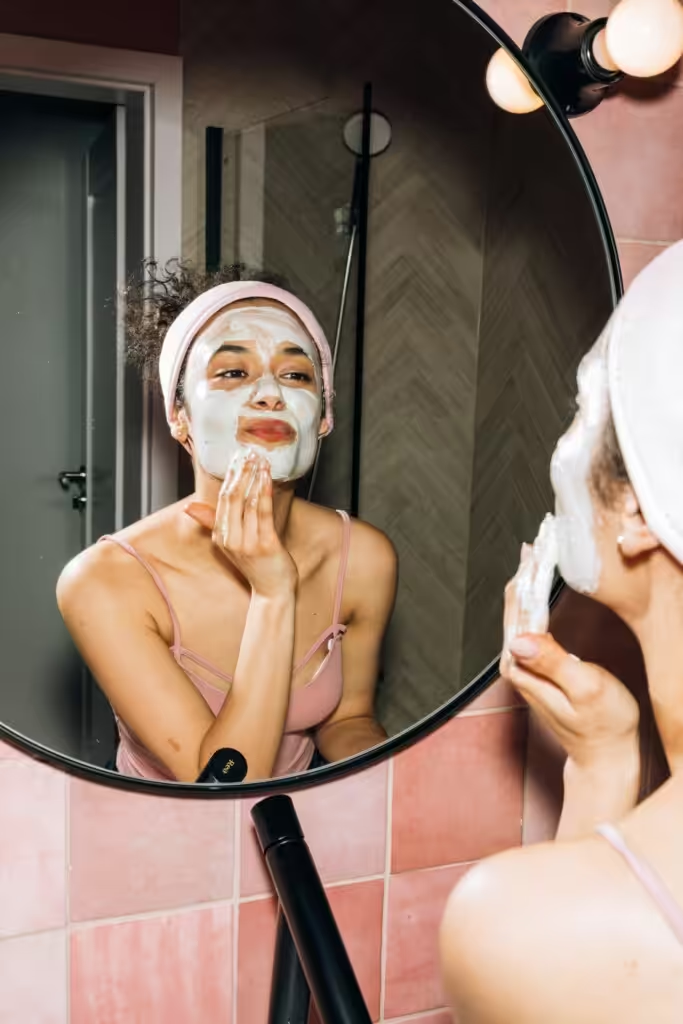
Do you want to do something good for your skin regularly? A face mask doesn’t just give your skin an extra dose of care – it also brings a spa experience and a bit of relaxation right into your own bathroom. Depending on your needs, you can even incorporate a face mask into your skincare routine several times a week.
Source: KoolShooters/Pexels
- Sanft & Schön tip: Use an exfoliant before your mask! That ensures all dead skin cells are removed and your pores are open. This way, the mask’s active ingredients can penetrate deep into your skin and work effectively.
For oily skin we recommend a charcoal-based mask, which regulates sebum production and calms the skin. For dry skin, an AHA face mask is suitable, which supplies your skin with plenty of moisture and has a firming effect.
Depending on which type of face mask you use, you can skip any boosters, serums, or your night cream afterward – especially if you’ve applied a particularly intensive, nourishing mask.
Skincare routine: Pay attention to the ingredients
No matter how good your facial care routine is: if you use products whose ingredients don’t suit your skin, you won’t achieve a convincing effect. Moreover, many creams and serums contain added ingredients whose effectiveness hasn’t been scientifically proven. Retinol, vitamin E, and vitamin C, for example, do have a proven caring effect.
So always research in advance which ingredients are suitable for your skin and specifically target your “problem areas.” Be sure to avoid products containing alcohol, since these can have an irritating effect. Fragrances should always appear at the end of the ingredients list – meaning only a very small proportion is contained. Ingredients like parabens, silicones, or mineral oils, on the other hand, should ideally not be found in your skincare products at all.
Do’s and don’ts of your facial care routine
- DO: Be sure to tailor your products to your skin!
- DO: Wear sun protection every day – even in winter! That way your skin stays youthful and healthy.
- DO: Give your skincare routine a chance! You don’t see an instant effect or don’t know whether individual products even work? Be patient: your skin first has to get used to the new care routine and generally needs 30 days to renew itself.
- DON’T: Exfoliate too much! If you use an exfoliant every day, your skin’s own lipids get worn away, which can permanently disrupt your natural skin barrier.
- DON’T: Skip washing your hands! Carrying out a facial care routine with unwashed hands? Better not to. Wash your hands thoroughly, so dirt and bacteria don’t get onto your skin or into your cream jars.
Conclusion: Skincare routine in 10 steps
Whether a basic care regimen in three steps or an elaborate facial care routine: with the right products, applied in the correct order, your skin will glow.
What’s important is that you give your skin time to get used to the new skincare routine. Within four weeks, you’ll notice a lasting effect – but only if you use the products and ingredients that suit your skin. Inform yourself thoroughly, and always layer your facial care from thin to thick consistency.