Finally summer! Off to the outdoor pool, the beach or the park. But before you slip into your favourite swimwear, many women need to remove hair from their bikini line. Whether shaving, waxing or permanent hair removal: we will tell you how to remove hair from your bikini line most effectively so that you can enjoy the long summer days to the fullest.
But be careful! Using the wrong method can lead to skin irritation, spots and ingrown hairs. Women with sensitive skin should be particularly careful. This article explains which method suits you best, its advantages and disadvantages, and what to consider in each case.
Bikini Line Hair Removal Method #1: Shaving
The most widespread method of hair removal in the intimate area is probably shaving. It is easy, quick and extremely effective, as it leaves skin smooth and supple—with the right preparation and aftercare. On the other hand, skin quickly becomes irritated, razor burn and small spots can occur. An ingrown hair in the intimate area is also possible when hair grows back after shaving. Shaving usually keeps skin smooth for only one or two days and, because shaving strengthens the root, switching to permanent hair removal methods can be very painful.
Vorteile
- Little time required
- Low cost
- Smooth result
- Any intimate hairstyle is possible
Zu beachten
- Hair grows back quickly
- Skin irritation is possible
- Hair can grow in
- Switching to permanent hair removal can be painful
Bikini line hair removal without spots: Here’s how
If, despite the many disadvantages, you want to shave quickly, pay attention to the following:
- Choose the right razor: A razor with several blades and a flexible head is best. This lets you reach every area easily and avoid cuts.
- Intimate exfoliation as preparation: An intimate exfoliator removes young hairs that are just growing out of their follicles, thus preventing ingrown hairs and inflammation. A gentle body scrub with natural ingredients or a loofah sponge is ideal.
- Avoid dry shaving: It is best to use moisturising shaving foam and always shave in the direction of hair growth. This prevents skin irritation and ingrown hairs.
- Care after shaving: Soothe your skin after shaving with moisturising and cooling lotions or body oils. Also avoid underwear that is too tight, as it causes friction.
Bikini Line Hair Removal Method #2: Epilating
Another method for removing hair from your bikini line is epilating. It pulls out the hair including the root. This keeps skin smooth much longer than shaving. However, the procedure is also very painful—so it is not for the sensitive. When epilating, you need to pull the skin taut to keep pain as low as possible—which is difficult in the intimate area. Hair is nowhere denser and more robust than in the bikini line, so we would recommend epilating for legs rather than the intimate area or underarms. Redness, skin irritation and ingrown hairs can also occur.
Vorteile
- Smooth result
- Hair removal including the root
- Hair grows back more slowly and finer
Zu beachten
- Very painful
- Skin irritation and ingrown hairs possible
- Not suitable for every intimate hairstyle
Bikini Line Hair Removal Method #3: Depilatory Cream
Like shaving, depilatory cream offers painless, quick and inexpensive hair removal. It is simply applied with a spatula and removed after a short application time. It can be used to create any intimate hairstyle and leaves skin smooth and supple. However, depilatory cream is not a particularly effective method, as it dissolves hair through sulphur compounds without destroying the hair root. New stubble therefore appears after only a few days. You should also take a close look at the cream’s ingredients. Many contain chemical substances that are not recommended for the bikini line and can cause skin irritation, redness, spots and allergic reactions—not to mention the unpleasant smell.
Vorteile
- Painless
- Quick and easy to use
- Low cost
- Hair grows back softer
- Any intimate hairstyle is possible
Zu beachten
- Skin irritation or allergic reactions possible
- Strong smell
- No permanent hair removal
- Usually chemical ingredients

Source: Karolina Grabowska/pexels
Bikini Line Hair Removal Method #4: Sugaring
Sugaring definitely lasts longer than the methods presented so far—your bikini line stays smooth for up to four weeks. In sugaring, a minimally warmed sugar paste is applied against the direction of hair growth, allowed to harden and then removed along with the hair. This paste consists mainly of sugar, lemon juice and water—natural ingredients that are generally well tolerated, even by sensitive skin. Compared with the previous methods, sugaring is more expensive and time-consuming. Only a small area can be treated at a time, so you should allow plenty of time at the beauty salon.
Vorteile
- Hair removal including the root
- Hair grows back more slowly and finer
- Any intimate hairstyle is possible
- Natural ingredients
Zu beachten
- Painful
- Sugar paste residue can settle on the skin
- Relatively high cost and time required
Intimate Area Hair Removal Method #5: Waxing
With waxing, your skin also stays smooth for up to four weeks and offers a quick solution in summer. In Brazilian waxing, hot wax is applied to the skin and removed abruptly against the direction of hair growth. Including the root—that means hair grows back thinner and more slowly. Unlike sugaring, the skin feels perfectly smooth after waxing. The wax works like an exfoliant, freeing the skin of dead skin cells.
Our pain-relief tip: Before treatment, you can lightly “numb” your bikini line with cooling pads. The ideal hair length for waxing is about 5 mm, so hairs should be neither too short nor too long. This also means you have to walk around with stubble for a few days before waxing until the hair is long enough.
Anyone who wants to save money and remove bikini-line hair at home with wax may suffer skin irritation, ingrown hairs and, in the worst case, nasty bruises. It is therefore advisable to leave this method to experts, for example at our waxing studio in Berlin. They will also give you tips on preparation and care after waxing.
Vorteile
- Hair removal including the root
- Smooth result
- Hair grows back more slowly and finer
- Any intimate hairstyle is possible
Zu beachten
- Time required
- Painful
- Complicated to do yourself
Bikini Line Hair Removal Method #6: Laser Hair Removal
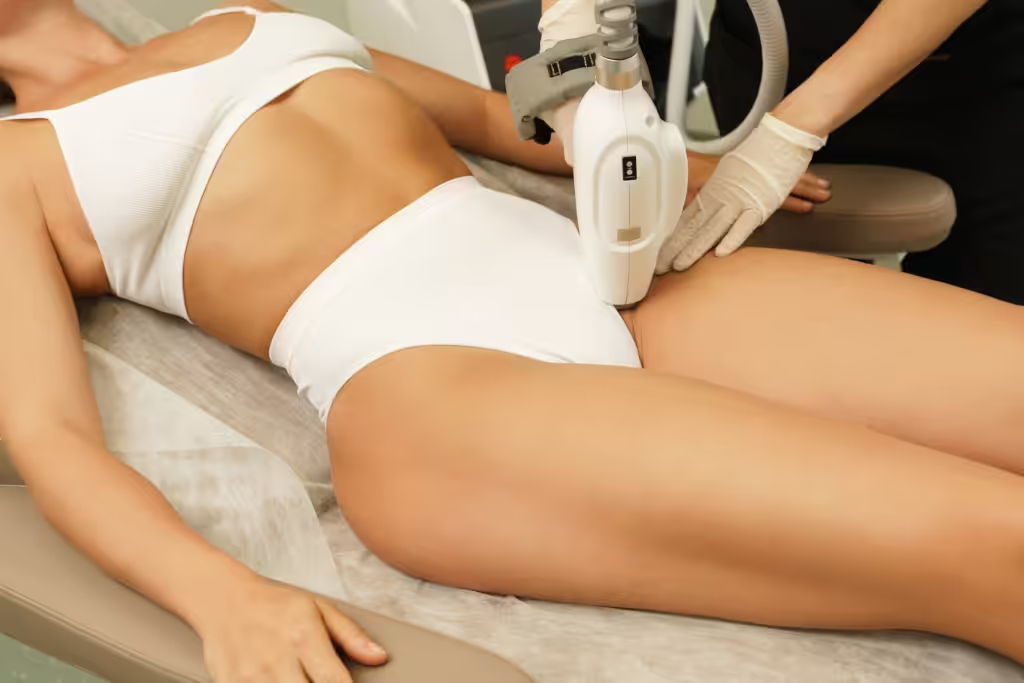
With laser hair removal using a 3-wave diode laser, the laser’s light penetrates the skin in a focused, targeted manner and destroys the hair root. After several sessions, this popular method leaves your bikini line permanently hair-free. It is particularly effective for fair skin and dark hair—by now, permanent hair removal also works gently and effectively for light hair. In addition, the skin should not be exposed to sunlight for around four to six weeks after treatment. Laser hair removal is therefore recommended in autumn or winter. The number of required sessions depends on skin type, hair thickness and the body area to be treated. Permanently removing a female moustache usually requires more sessions than removing bikini-line hair. Usually, around six to eight sessions at intervals of six to ten weeks are needed.
Vorteile
- Not as painful as waxing
- The only truly permanent hair removal
- Smooth result
- Also suitable for sensitive skin
Zu beachten
- Time and cost required
- Not suitable for tanned or tattooed skin
- Pigmentation disorders possible if used improperly
Conclusion
So that you no longer have to worry about razor burn, stubble and coarse hair in the bikini line before your next visit to the pool, we have presented the best hair removal methods here. If you need it done quickly, a razor or epilator is best. But be careful: skin irritation, ingrown hairs and spots are not uncommon with these applications. If you want a longer-lasting result, it is best to go to a waxing studio or have your bikini line permanently treated with a laser! We provide comprehensive advice on which hair removal method achieves the best result for you personally. Make an appointment with Sanft & Schön today for silky-soft skin—even on your bikini line.