But don’t worry: in our guide “SOS help against ingrown hair in the intimate area” we explain how best to remove it—and of course also how you can prevent or even completely avoid ingrown hairs.
Let’s get started!
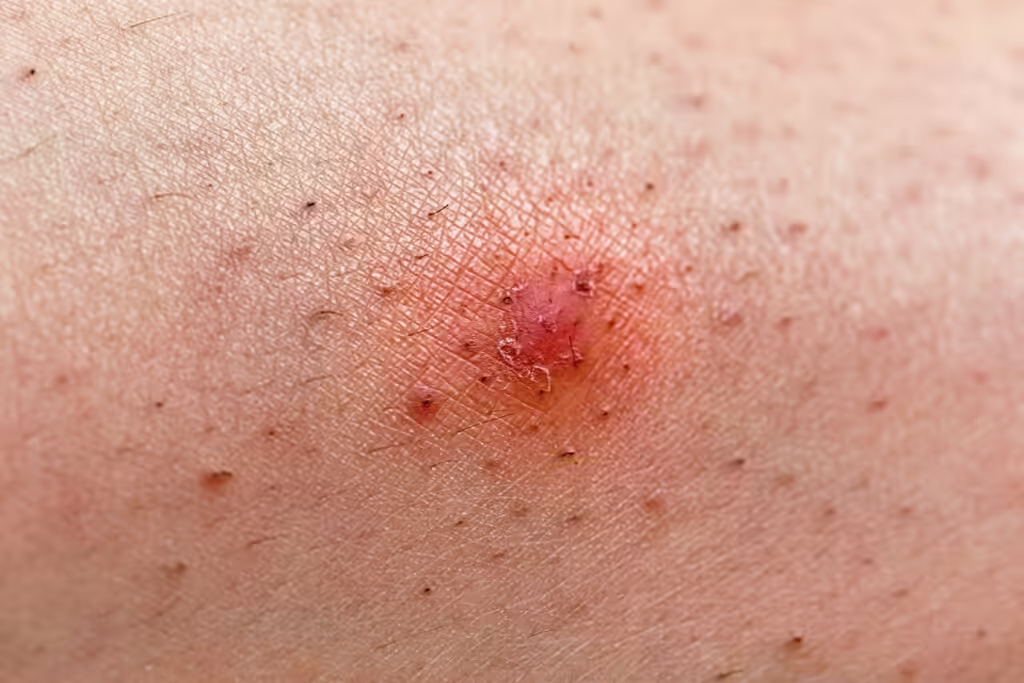
Recognizing an ingrown hair in the intimate area: The most common symptoms
- Itching or pain
- The affected area is red and swollen
- A raised bump, similar to a pimple
Source: Toeizuza Thailand/shutterstock
How does an ingrown hair develop?
Ingrown hairs are nothing unusual at first. They occur during hair removal with a razor or epilator. But why? There are several reasons for this.
1. Sharp hair edges
You’ve probably noticed yourself that your hairs have a sharper edge after shaving and are no longer “soft”. It’s precisely this hard hair edge that can cause your hair to grow sideways into the skin instead of straight out.
2. Thick hair structure
If you have curly, thick hair, the problem occurs more often for you, because coarse hair naturally tends to curl more strongly and grow in the wrong direction.
3. Dead skin flakes
Another cause can be dead skin flakes that clog the hair follicle channels and, together with bacteria, lead to inflammation.
4. Tight clothing
If you put on tight clothing right after shaving, you encourage your hairs to grow inward. As soon as the fabric rubs against your skin, the regrowing hairs can easily grow beneath the surface of the skin. So: it’s better not to wear tight trousers immediately after shaving the bikini area.
Source: Karolina Grabowska/pexels
5. Epilating
The best thing about epilating is that your hair removal lasts longer. A major drawback that’s often forgotten with this method: this type of hair removal promotes ingrown hairs, because the hair root is damaged during epilation. As a result, the hair doesn’t grow back straight but regularly becomes encapsulated and, in the worst case, grows inward. If this has already happened to you several times, you should switch to a different hair removal method—for example, permanent laser hair removal.
Ingrown hair in the intimate area: A particularly susceptible area of skin
Ingrown hairs can basically occur anywhere you have hair. However, a hair grows inward most often on the legs, under the arms, and in the especially sensitive bikini area, since we shave these areas more often.
The skin in the bikini area is particularly soft and sensitive. In addition, the curly and coarse texture of the hair can cause the regrowing pubic hair to “curl back”. The hair tips then grow toward the delicate skin—and injure it.
You can read about which hair removal method suits you for the sensitive intimate area in our comparison on hair removal in the bikini area.
Under the arms, the hair is noticeably softer. But here too there’s a risk of ingrown hairs. That’s because the skin in the underarm area is not only very soft, but also sensitive and elastic. After all, it has to keep up with every movement of the shoulder joint—from yoga to lugging boxes. This increases the risk that the skin burns after shaving and that individual hairs don’t push straight through the hair follicle to the surface, but instead grow inward.
On the legs, the hairs tend to be thin and smooth, and the skin is firmer. However, overly tight leggings, trousers or jeans can rub directly on the skin here and thereby influence the growth direction of the regrowing hairs.
Source: Sora Shimazaki/pexels
Now you know all about how ingrown hairs occur and where they appear most often. But how can you avoid this nagging problem?
How can you prevent ingrown hairs?
The truth is: not shaving, waxing or epilating at all would of course be the best option. But giving up smooth skin entirely isn’t a solution for us either. So it’s best to try to follow these tips if you want to avoid ingrown hairs.
1. Prepare your skin for shaving
Before shaving comes after shaving. That’s why it’s advisable to take a warm shower first—this softens the skin and opens the pores. Regular exfoliation also helps remove dead skin flakes and prevent clogged pores. We recommend beta hydroxy acid, which dissolves the top layer of keratinized skin.
2. How to shave gently
If you’re going to shave, then please always in the direction of hair growth. Also make sure to use sharp blades without rust—they cut your hairs cleanly and straight and reduce the risk of ingrown hairs. Shaving foam also minimizes friction between the blade and skin, which prevents pimples and irritation. Otherwise razor burn can quickly occur.
By the way: did you know that dry shaving can promote ingrown hairs? With dry shaving, the blade doesn’t glide smoothly over the skin and therefore can’t cut the hairs cleanly either. So: better invest a few extra minutes and shave wet. It’s gentler—and more effective.
3. Use fragrance- and alcohol-free skincare
Whether shaving, epilating or waxing: after the procedure your skin needs moisture. Cooling, soothing ingredients such as aloe vera are ideal, as they intensively care for the affected areas—read our article “Aftercare for waxing” on this too. On your healthy, well-hydrated skin, new hairs emerge from the pores more easily and become ingrown less quickly.
It’s also worth investing in a special shaving balm against stubborn hairs, for beautiful skin without inflammation. Ingredients such as vitamin E nourish the skin and additionally help bring individual hairs to the surface. This prevents painful inflammation, as well as pimples, redness or cuts.
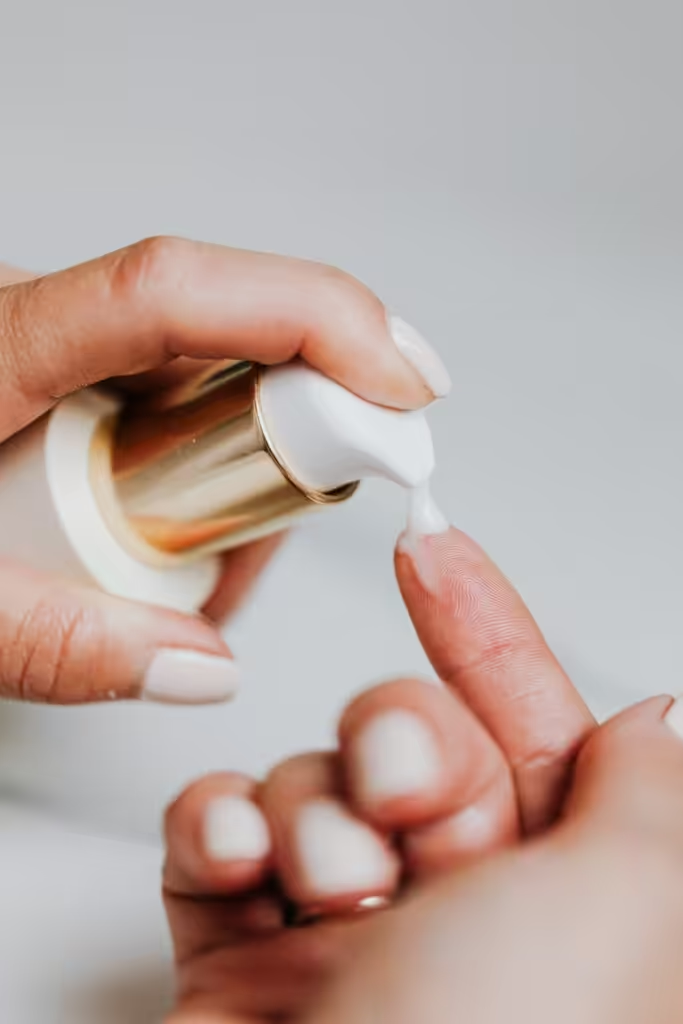
Removing an ingrown hair in the intimate area: Do’s and Don’ts
Your skin is inflamed, hurts and is swollen. The only thing you want right now is to get rid of this hair. The only question left is how you can do that safely and painlessly.
Let’s start with what you’d better not do.
Don’t
- Under no circumstances should you press on the inflammation with your fingers, as this will only make it worse.
- Better not to rely on “home remedies” from the food aisle. They don’t help with ingrown hairs—on the contrary, they irritate the skin.
Do
- Apply an ointment containing zinc. It has an anti-inflammatory effect and speeds up wound healing. As an alternative, gentle products with salicylic acid are also an option, as they free the pores from keratinized skin and dead skin flakes, under which the individual hair lies buried.
- A warm compress can help open the pores and bring the hairs that have grown in at an angle to the surface of the skin. Alternatively, you can also place a warm washcloth on the affected area of skin for a few minutes, or simply start after a full bath or a long, hot shower.
- As soon as the hair slowly moves toward the surface and becomes visible, you can carefully remove it with a sterile needle or sterile tweezers. This allows the hair, including the root, to be pulled out of the skin in the direction of growth. After removing it with tweezers or a sterilized needle, you must disinfect the wound.
Caution: If a bump, abscess or cyst forms as a result of the ingrown hair, you should definitely see a dermatologist. They will then remove the hair—under local anesthesia—with an incision. It’s also advisable to see a specialist in the case of folliculitis. In the worst case, bacteria can enter your bloodstream.
Never worry about ingrown hairs again with laser hair removal
Source: AndriyShevchuk/shutterstock
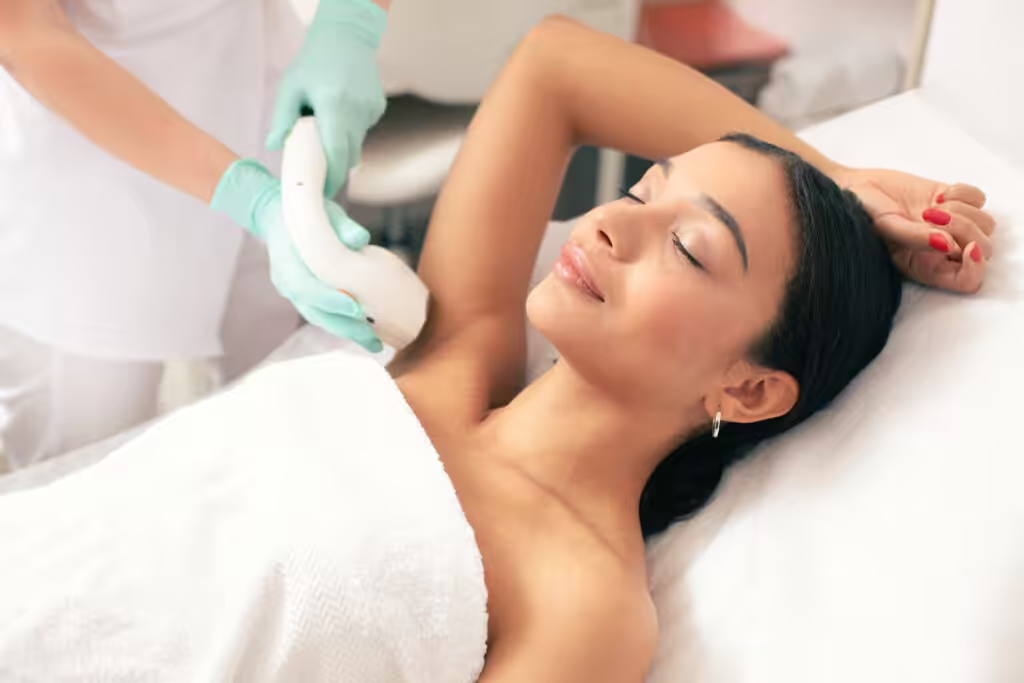
Prevention isn’t enough for you—you really want to make sure that a hair never again goes astray while growing out? There are many methods for removing hair permanently. Laser is one option to put an end to annoying hairs in sensitive areas once and for all.
To permanently remove problem hairs, at Sanft & Schön we rely on diode laser technology. This guarantees fast, safe and effective hair removal.
The diode laser is a semiconductor and achieves a wavelength of 755 nm, 808 nm or 1064 nm. This is ideal for reaching deep-seated hair follicles and treating thick hair—for example on the back.
How it works: as the light penetrates the superficial layers of skin, the skin’s melanin absorbs energy. This converts light energy into heat—damaging the surrounding cell structures that are responsible for hair regrowth.
The result: your skin will remain permanently hair-free. Laser hair removal in Berlin is especially effective on light skin and dark hair—but all other skin and hair types can also be treated gently and effectively with us.
At Sanft & Schön we only work with the latest devices at the highest medical standard in order to achieve the best results for you. By the way: permanent hair removal has long since stopped being just a women’s thing. Laser hair removal for men also offers numerous advantages—whether for hygienic and aesthetic reasons or out of athletic ambition.
Do you want to learn more about permanent laser hair removal at Sanft & Schön in Berlin? No problem! We’re happy to share our know-how with you even before your appointment and inform you in detail about the process of laser hair removal and its risks.
If lasering feels too final for your first visit, you can also have your hair professionally removed with hot wax at our waxing studio first—and enjoy smooth skin for up to four weeks afterward.
We also offer all kinds of facial treatments at our beauty studio, such as microneedling, aquafacial as well as microdermabrasion and acne treatments in Berlin.