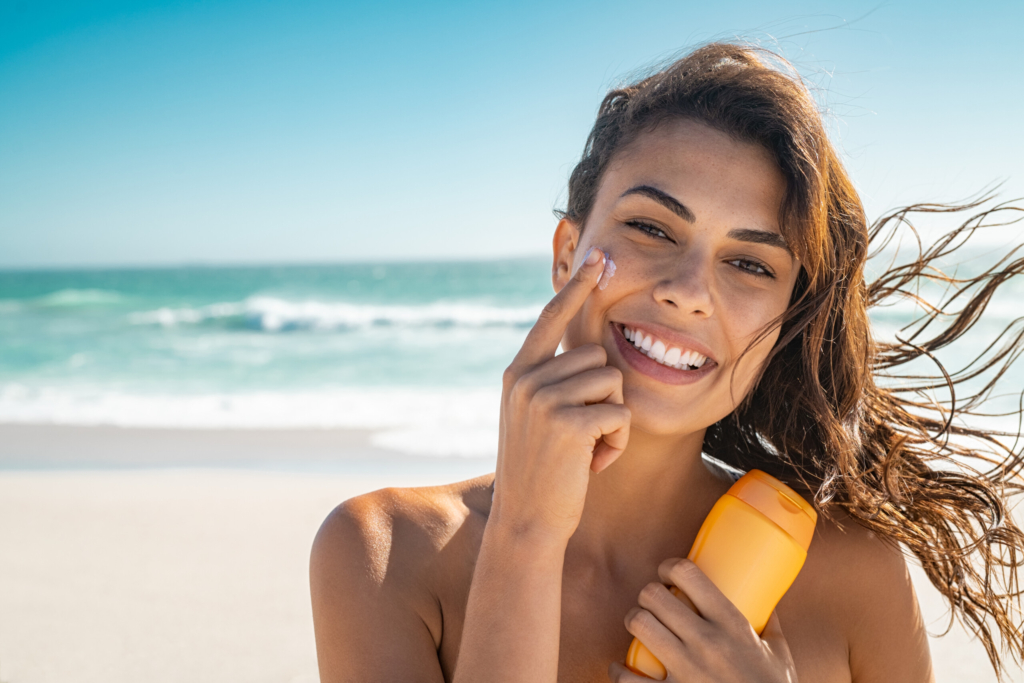
Summer, sun – sunburn? You know it too: all winter long we long to finally feel warm sunrays on our skin again, to lie on the beach or by the lake, and to go hiking, cycling, or jogging without a thick jacket.
But what we regularly forget in our summer euphoria is our sunscreen. The painful consequences don’t take long to appear – without sufficient UVA/UVB protection, your favorite outdoor activity or that weekend sunbathing session leaves unsightly and health-threatening traces on your skin – in short: you have a sunburn.
What’s more, your skin’s needs change significantly in summer. To care for it properly and protect it from environmental influences, you should send your usual skincare routine on summer break and adapt it to the warm season. In this article, we’ll reveal which skincare products you should rely on in summer, how to help your irritated skin recover, and give you tips for first aid for sunburn. That way, you and your skin are guaranteed to get through summer unscathed.
Irritated Skin from Sunburn: How Does It Happen?
Sunburn (lat. Dermatitis solaris) occurs when excessive sun exposure burns the skin. How quickly this happens and how severe the consequences are depends individually on your skin type, any medications you take, and the intensity of the sun.
A distinction is usually made between six different skin types, each with a specific self-protection time against sun damage:
- Type 1 has very fair skin, usually reddish to reddish-blonde hair, and barely tans in the sun. The skin’s self-protection time is a maximum of 15 minutes.
- Type 2 has fair skin, blonde to brown hair, and tans barely to moderately in the sun. The skin’s self-protection time is a maximum of 20 minutes.
- Type 3 has fair to light brown skin, dark blonde to brown hair, and tans progressively in the sun. The skin’s self-protection time is a maximum of 30 minutes.
- Type 4 has brown to olive skin, dark brown hair, and tans progressively in the sun. The skin’s self-protection time is a maximum of 40 minutes.
- Type 5 has dark brown skin, dark brown to black hair, and doesn’t tan further in the sun. The skin’s self-protection time is a maximum of 60 minutes.
- Type 6 has dark brown to black skin, black hair, and doesn’t tan further in the sun. The skin’s self-protection time is a maximum of 90 minutes.

Source: ROCKETMANN TEAM/pexels
By the way: burns caused by the sun are the same as those caused by fire or other sources of heat. There are three different degrees of severity:
-
Degree 1
Mild sunburn: areas of skin are red, overheated, and burning, skin feels tight and is slightly swollen, possibly itchy. -
Degree 2
Moderate sunburn: blisters form on the skin, after which the burned skin peels. -
Degree 3
Severe burns: the uppermost layers of skin are destroyed and peel off, scarring possible.
Sunburn is caused by ultraviolet radiation – UV radiation for short: UV-A radiation covers wavelengths from 400 to 315 nm, while UV-B radiation covers wavelengths from 315 to 280 nm. UV-C radiation, with a wavelength of 280 to 100 nm, is filtered out in the upper layers of the Earth’s atmosphere and doesn’t reach the skin.
The basic rule is: the shorter the wavelength, the more harmful and energy-rich the radiation. For the skin, UV-B radiation is mainly dangerous, as it damages the cells in the epidermis, causing the deeper-lying dermis to become inflamed within a few hours. We all know the result: sunburn occurs, the skin turns red, swells, itches, and causes pain.
UV-A rays penetrate deeper into the skin, all the way to the dermis, and are therefore mainly responsible for premature skin aging. You can find out how to prevent long-term UV damage in our article on skin aging from the sun.
By the way: you won’t be able to determine the actual extent of your burns right after sunbathing. It takes about six to eight hours for the first symptoms to appear, and the symptoms reach their peak 24 to 36 hours later.
First Aid for Sunburn: 5 Tips That Help Your Skin Recover
Whether it’s at the edge of your bikini, that one spot on your back that’s hard to reach, or your parting, which you always forget: once the sunburn is there, you need to act fast. We’ve gathered five tips against sunburn that help irritated skin recover and provide first aid for sunburn. But be careful: only use our tips for mild sunburn! As soon as your skin develops blisters, you should definitely have it treated by a doctor.
1. Soothe Sunburn: Cool It Down Immediately
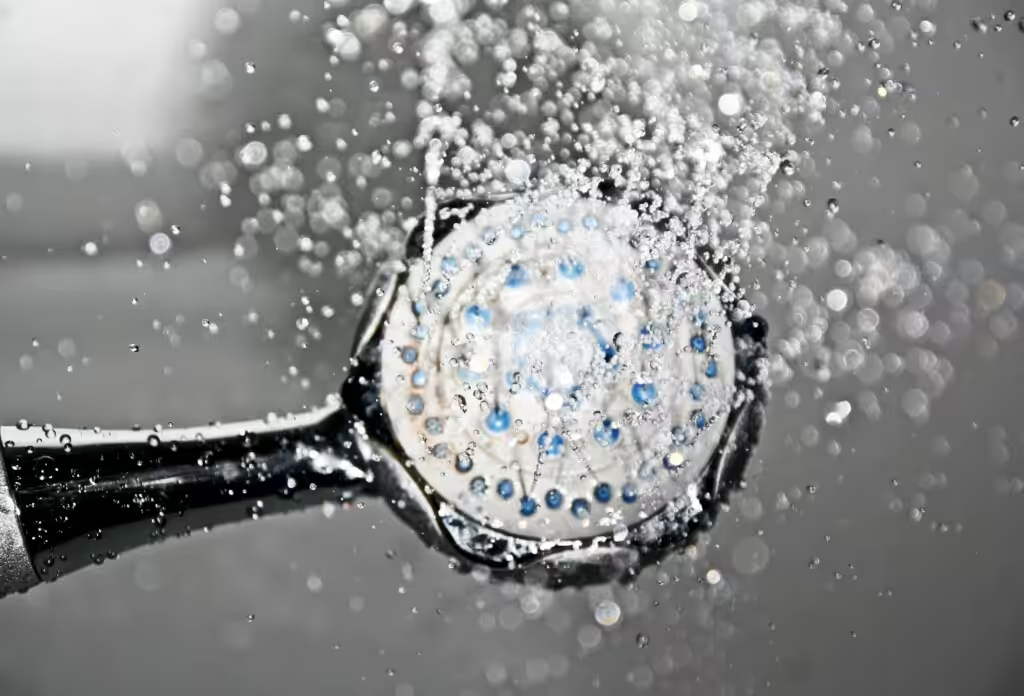
When your skin burns, feels tight, and glows, cooling it down eases your discomfort. Cool your sunburn, for example, with damp compresses that should stay on your skin for about one to two hours. Keep re-moistening them in the meantime, for instance with cool chamomile tea or green tea. A lukewarm to cold shower can also work wonders.
- Caution: avoid common home remedies for sunburn like quark or yogurt on burned skin! Dairy products can introduce germs into open wounds and cause serious infections. Cold packs or ice cubes should also not be used for first aid for sunburn, as they cool the skin so intensely that it could suffer frostbite.
Source: Pixabay/pexels
2. First Aid for Sunburn: Anti-Inflammatory Creams
If home remedies don’t help, you can get advice at the pharmacy and turn to special formulas: burn gels or creams with cortisone can soothe sunburn. If necessary, anti-inflammatory painkillers such as ibuprofen can also be taken for pain.
3. Help Your Skin Recover: After-Sun Products
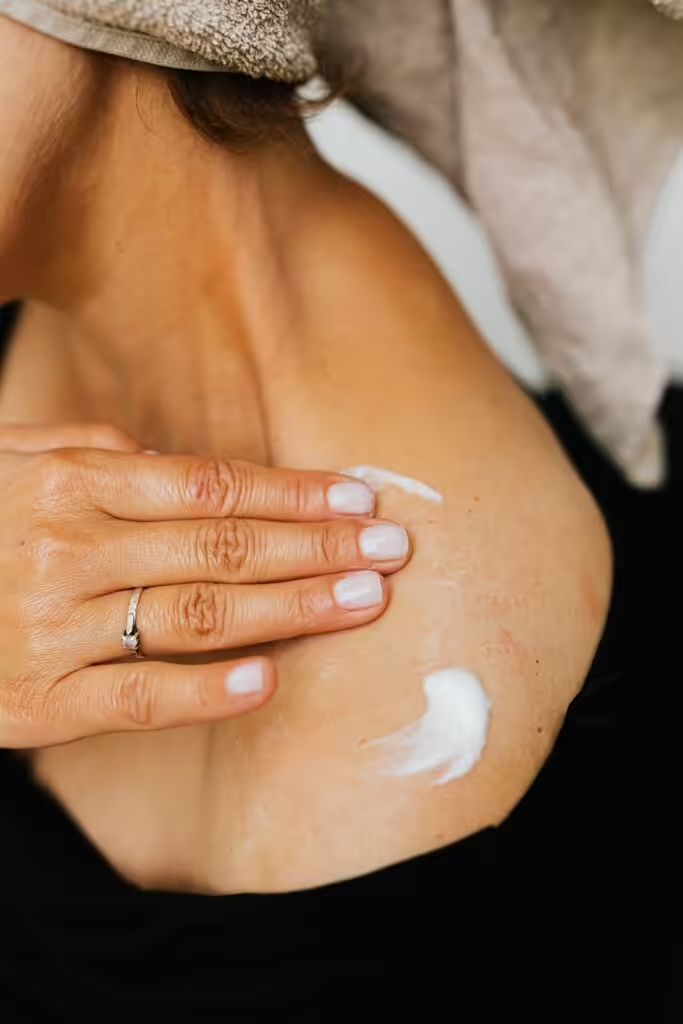
Sunburn strips a lot of moisture from your skin. After-sun products provide the moisture it needs and soothe stressed skin. Make sure panthenol is included – it helps with unpleasant itching and cools your burned skin.
Aloe vera is also a true miracle worker for first aid for sunburn: its sap has a cooling and pain-relieving effect. To use it, cut open a leaf, collect the sap, or drip it directly onto your burned skin. DIY after-sun too complicated for you? Many products from the drugstore or pharmacy contain aloe vera, and pure aloe vera gel is also available to buy.
Source: Karolina Grabowska/pexels
4. Soothe Sunburn: Drink Plenty of Fluids!
What after-sun products do from the outside, sufficient water intake achieves from the inside: after a sunburn, it supplies you with the moisture you need, supports the regeneration process, and helps ensure beautiful skin from within.
Sanft & Schön tip: pay attention to increased fluid intake already during sunbathing or your outdoor activity – this helps prevent heatstroke and headaches. Water also cools your body from the inside and gets your circulation going.
5. First Aid for Sunburn: Stay in the Shade
The most important rule of thumb for sunburn: stay in the shade until your skin has recovered. Even outside of direct sun, cover your reddened skin areas with light, loose clothing, ideally made of natural fibers. You should absolutely avoid tight-fitting clothing, as it can rub against your body and cause pain. Did you burn your face? Then a large sun hat will shield you all around and look stylish too!

Source: Kindel Media/pexels
Perfect Skincare in Summer: Adapt Your Routine to the Warm Season
It’s not just sunburn that stresses your skin during the warm season: to nourish your summer skin properly and help irritated skin recover, you should definitely adapt your summer skincare to the changed weather conditions. Because with the first warm sunrays, your skin’s needs also switch into summer mode.
Why? While your skin tended to be dry in winter, sebum production picks up again in summer – so your skin gets a bit oilier as it warms up. That’s why your face feels oily and shiny more quickly. Increased humidity supports this effect. The motto for well-cared-for summer skin is therefore: leave rich textures (water-in-oil emulsions) in the cupboard and ramp up lightweight, lipid-poor moisturizers (oil-in-water emulsions)!
Source: Anna Tarazevich/pexels
Moisturizing Care for Radiant Summer Skin
Do you have rather dry skin? Then you’ll quickly notice that your skin produces more fat again in summer and you need less rich care. We recommend applying a small amount of facial oil or cream together with plenty of moisturizing serum. This way you support your skin with enough moisture plus a slightly richer touch of care.
If you have rather oily or combination skin, a moisture-focused skincare routine is very important, as it improves your skin’s own cleansing function by liquefying sebum. So the excess sebum can be transported away properly, you should avoid oil-based care completely and use only a moisturizing serum, for example with hyaluronic acid, niacinamide, vitamin C, or aloe vera.
Determine your skin type in this article.
Sanft & Schön tip: for a little freshness boost in the morning or evening, you can store your favorite serum in the fridge!
Summer Skincare: High UV Protection Is Essential
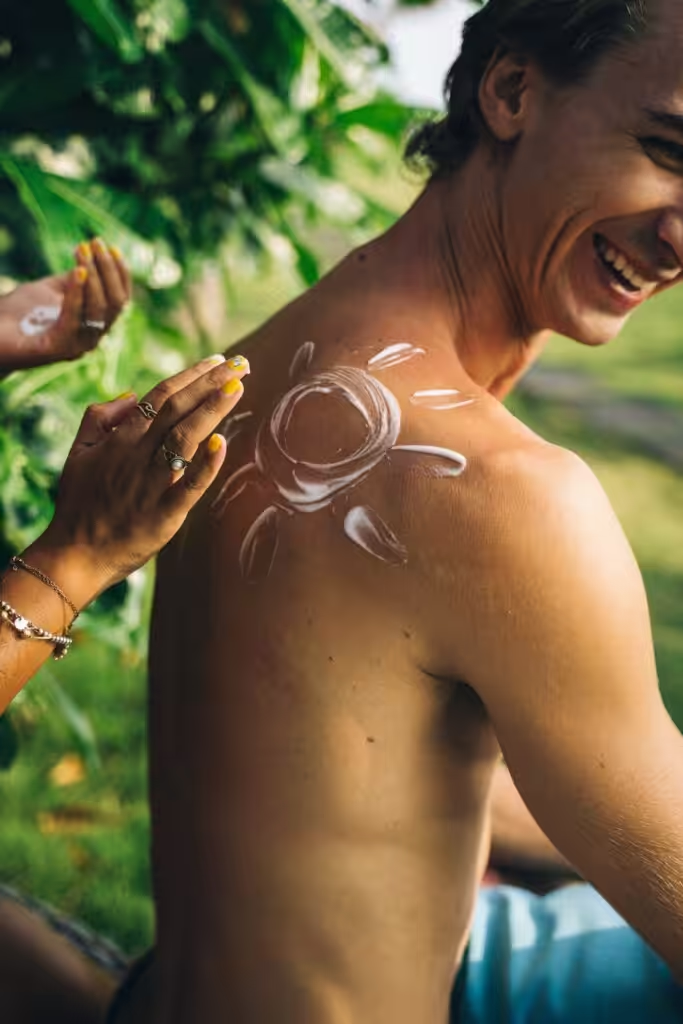
Not just in summer, but all year round, our most important skincare rule applies: protect your skin from UV radiation! Many day creams now have at least a light, built-in UV-A and UV-B protection – but this is usually not enough to protect your skin from sunburn and the like.
Here’s why: to protect your facial skin well, you need to apply quite a lot of cream. You can work out the correct amount using the “three-finger rule”: your index, middle, and ring finger should be covered with a strip of cream. We also recommend using a sun protection factor of at least 30 and making sure that UV-A and UV-B radiation are actually covered.
So your sebaceous glands don’t clog up and to help minimize large pores, you should also use a product that’s non-comedogenic, has a light texture without a lot of fatty oils, and lets your skin breathe. If you opt for a synthetic UV filter, you can incorporate your cream into your skincare routine however you like. With mineral filters, you should remember to use your regular skincare first and then apply sun protection.
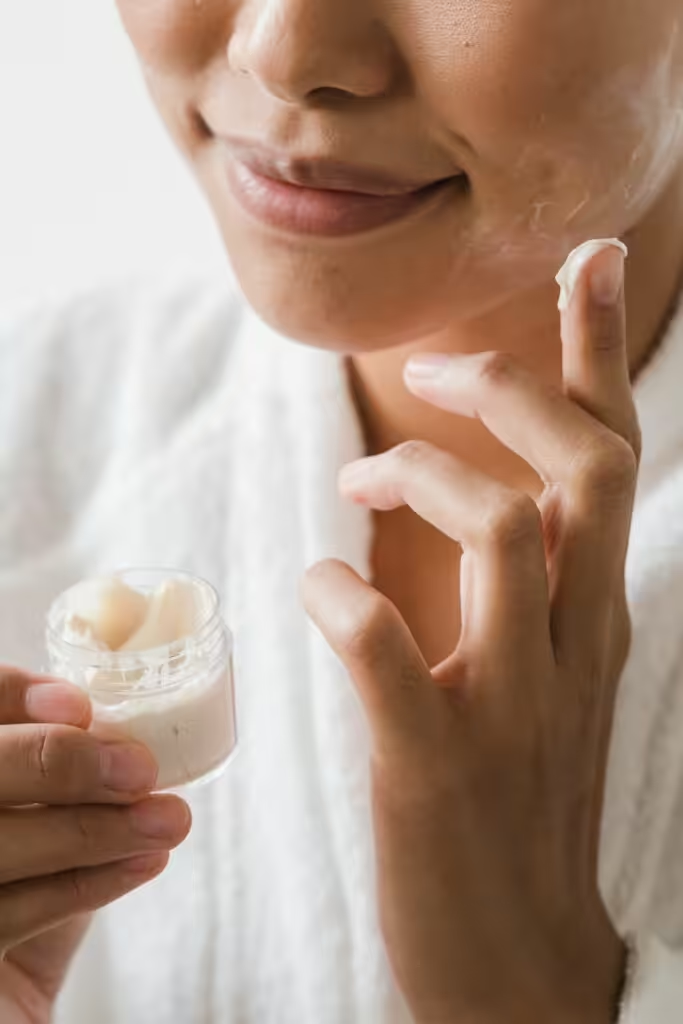
Gentle Facial Cleansing for Irritated Skin
Hot temperatures, constant sun exposure, sweat and the like don’t make things easy for your skin in summer: these strong environmental influences can quickly lead to irritated skin. That’s why you should pay attention to especially gentle facial cleansing in summer.
Thorough skin cleansing is especially important in the evening: stubborn residue from sunscreen and other skincare products can clog your pores, leading to pimples and irritation. So clean your face with mild, gently foaming, water-based products. Soothing ingredients such as aloe vera, salicylic acid, or grape seed extract are also ideal.
Incorporate these skincare highlights into your routine.
Summer Skincare: Exfoliating for the Perfect Glow
Regular exfoliation should definitely be part of your skincare routine in summer. Exfoliants not only remove dead skin cells but also make your skin wonderfully smooth and glowy, and ensure an even tan.
Your skincare products can also absorb better when pores aren’t blocked by dead skin particles, and hair removal is more thorough too, since fewer hairs grow in. Another useful side effect: exfoliating reduces blemishes and promotes blood circulation – making your skin irresistibly beautiful and rosy in summer!
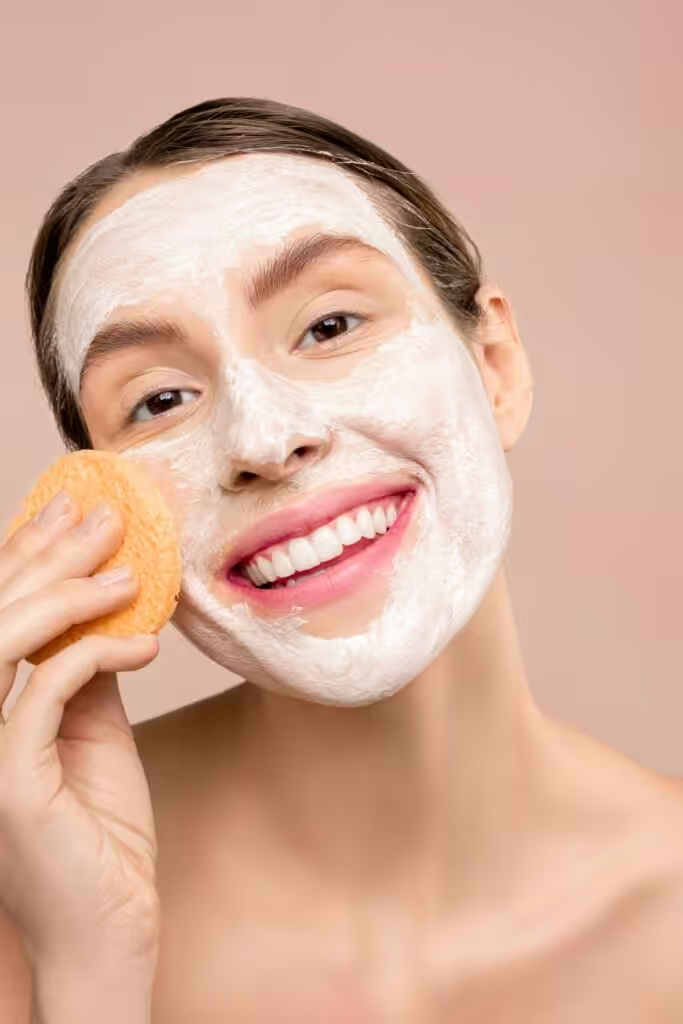
Source: Shiny Diamond/pexels
For the body, use a mechanical exfoliant, such as a body scrub from the drugstore or beauty tools like a dry brush or a sisal glove. Brush yourself off with it before showering – that will also wake you up in the morning and feels like a massage.
On your face, you should use gentle enzyme peels. Avoid fruit acid complexes like AHA and BHA in summer, as their exfoliating effect increases your skin’s sensitivity to light. If you still want to use these peels, apply them only before going to bed and make sure to use extra sun protection over the following days.
Beautiful Summer Skin: Professional Treatments with a Wow Effect
Do you want to optimize your summer skincare and help irritated skin recover? For radiant skin in spring and summer, you should definitely rely on professional care! Our Sanft & Schön treatments complement your skincare routine perfectly: while your own skincare products usually only work short-term and on the surface, Aquafacial, microneedling, and microdermabrasion treatments in Berlin Mitte unfold their effect at a deeper level. Our treatments revitalize your …
Conclusion on Summer Skincare: How to Help Irritated Skin Recover
Intense sunbathing sessions, thick layers of sunscreen, the occasional sunburn – our skin has to put up with quite a lot in summer. To prevent long-term skin damage and help irritated skin recover, you should never leave the house without sun protection during the warm season – we recommend a cream with SPF 30, and more is of course even better. Also adapt your skincare routine to your skin’s changed needs: focus on plenty of moisture, lightweight textures, regular exfoliation, and thorough cleansing in the evening. Regular treatments at a beauty studio are the perfect complement to your personal skincare.
If a sunburn does catch you off guard: first aid for sunburn includes cool compresses, moisturizing after-sun products with aloe vera or panthenol, a visit to the doctor, plenty of fluids, shade, and a sun hat.